Data forecasting enabling the transition to net zero

Meeting the challenge of a net zero energy future
About our DFES 2026
DFES gives you an evidence-based view of how distributed generation and low-carbon technologies could evolve across London, the South East and East of England to 2050 to meet net zero.
DFES explores four different scenarios rather than single scenario – Electric Engagement, Hydrogen Evolution, Holistic Transition, and Falling Behind – so you can test plans against different net zero pathways and make more informed decisions about net zero.
Updated annually, each edition combines the latest national and local assumptions for technology trends with local evidence, including insights from local authority energy plans (LAEPs).
Have a question or need help using DFES? Contact our DSO Network Insights team at networkinsights@ukpowernetworks.co.uk.
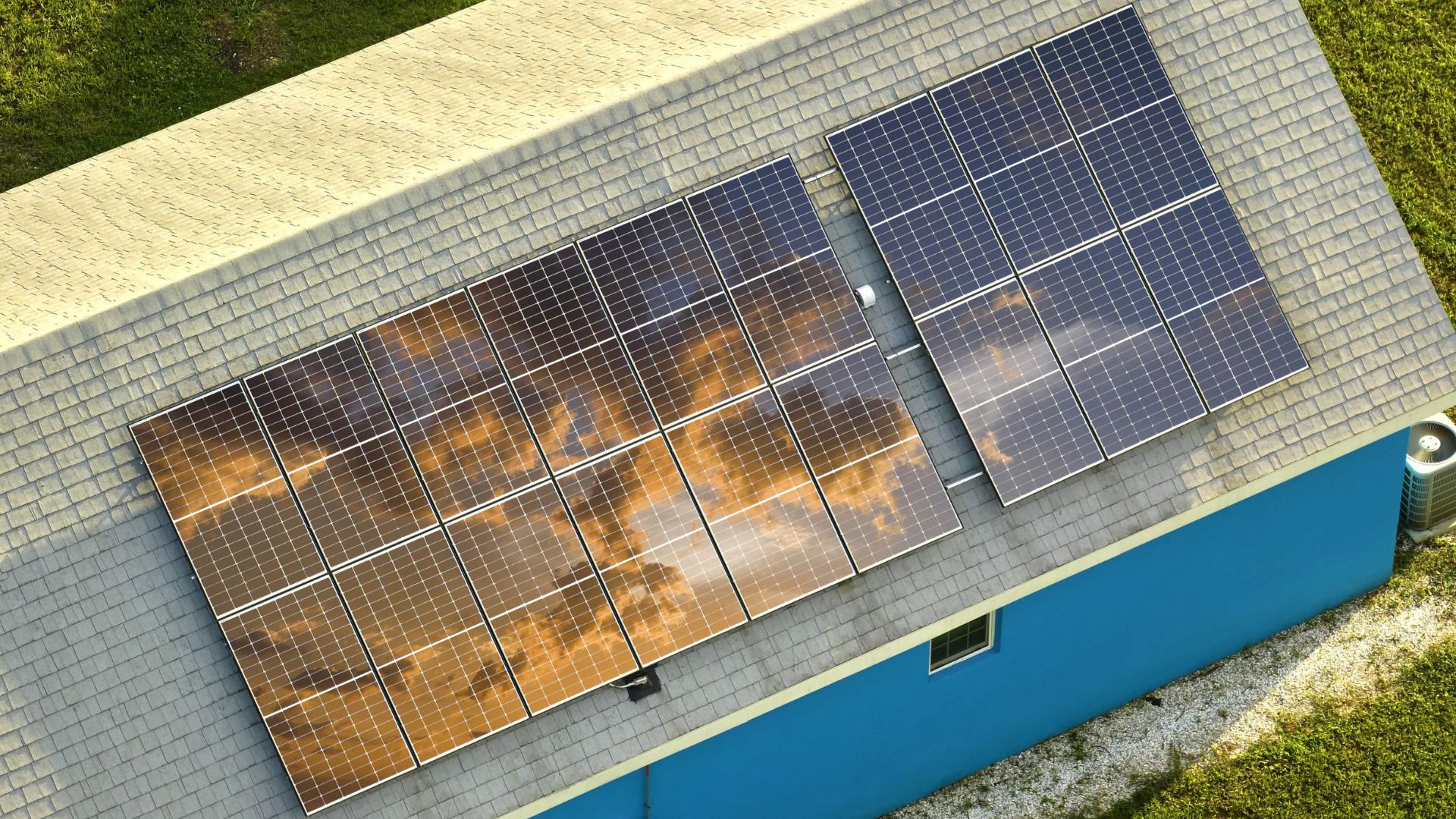
DFES 2026 is now available
What’s new in DFES 2026
- Updated battery electric vehicle (BEV) forecasts – refreshed to reflect the latest sales trends and government targets.
- More local insight – a greater number of local authority energy plans are reflected in the forecasts.
- Better housing forecasts integration – local housing trajectories and major development data have been incorporated.
- Stronger national alignment – the scenarios reflect the National Energy System Operator’s (NESO) latest Transitional Regional Energy Strategic Plan (tRESP).
- Connections reform alignment – large-scale generation and storage forecasts are aligned with the latest connections pipeline.
- Future homes and buildings – new standards are reflected in forecasts for rooftop solar and low-carbon heating in new homes.
Compare scenarios and find answers quickly
Dashboard – DFES 2026
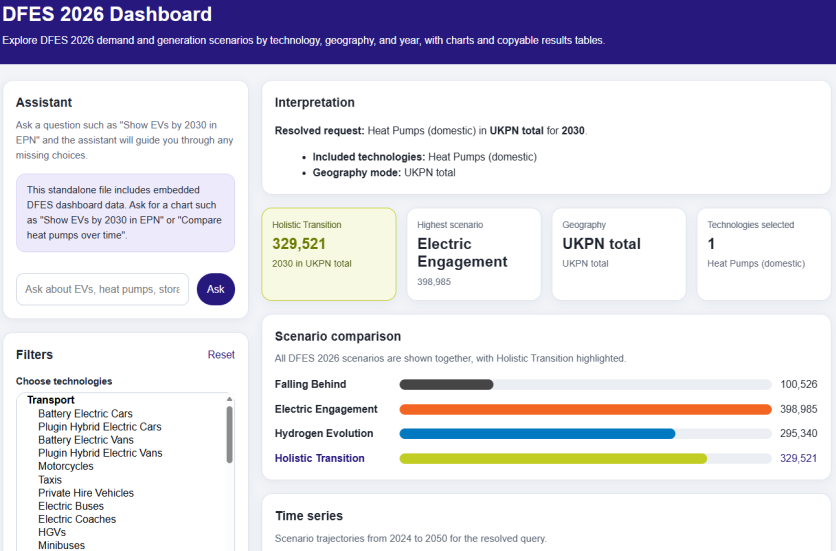
The DFES dashboard turns the 2026 forecasts into interactive charts, allowing you to compare demand and generation by technology, geography, scenario and year.
Use it as your starting point when you want to answer a specific question quickly via out chatbot, compare possible pathways or copy results into your own analysis.
See the forecasts on a map for location-based analysis
Interactive maps – DFES 2026
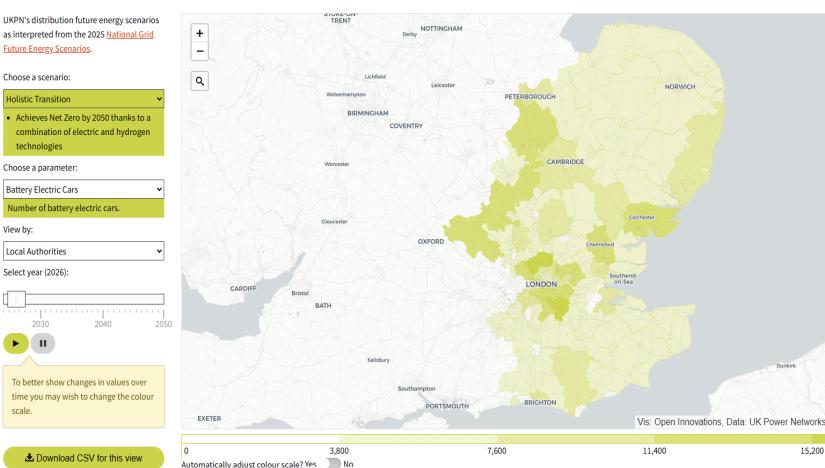
The interactive maps turn selected DFES forecasts into a colour-coded geographic view, making it easy to see where change may be concentrated and compare patterns between areas.
Use them for location-based planning by choosing a scenario, technology – such as electric vehicle, heat pump or solar PV capacity – year and area type, then exploring or downloading that view.
Understand the evidence behind the scenarios
Technical report – DFES 2026
The technical report explains the scenario framework, modelling process, data sources, and assumptions used to produce 2026 DFES.
It describes how national frameworks NESO Future Energy Scenarios (FES 2025); NESO tRESP 2026 Pathways; Local Area Energy Plans (LAEPs); housing data, and stakeholder inputs are incorporated.
Use it for in-depth analysis of future electricity demand and generation growth, changes from previous DFES publications, and the trends driving low-carbon technology uptake across UK Power Networks’ licence areas.
Download the data for your own analysis
Data – DFES 2026
The DFES 2026 Excel files contain the underlying data for a wide range of technologies, with detailed datasets available at Lower Layer Super Output Area (LSOA) and Grid Supply Point (GSP) level.
Use them when you want to examine particular technologies or locations, combine DFES with your own information, or build your own detailed models and visualisations.
Choose a dataset below to download the detailed DFES 2026 forecasts in Excel format. Files range from 1 MB to 29 MB.
You can download all of the raw DFES data in excel format (.xlsx) by using the links below. The files range between 1mb and 29mb in size:
LSOA Datasets:
- Domestic Air Conditioning Scenarios – LSOA
- Domestic Batteries Scenarios – LSOA
- Domestic Connection Count Scenarios – LSOA
- Domestic District Heating Scenarios – LSOA (with local authority input)
- Domestic Heating Scenarios – LSOA (with local authority input)
- Electric Car & Van Scenarios – LSOA (with local authority input)
- Electric HGV, Bus, Coach & Minibus Scenarios – LSOA
- Electric Motorcycle Scenarios – LSOA (with local authority input)
- Electric Taxi, PHV Scenarios – LSOA
- I&C District Heating Scenarios – LSOA (with local authority input)
- I&C Heating Scenarios – LSOA (with local authority input)
- I&C Air Conditioning Scenarios – LSOA
- I&C Storage Scenarios – LSOA
- Industrial and Commercial Connection Count Scenarios – LSOA
- Rooftop PV Scenarios – LSOA (with local authority input)
GSP Datasets:
DFES 2025

Receive the latest news and updates
To hear more from the DSO, simply fill in the sign up form and we’ll be in touch.
Sign up